



Francesco
Una bandiera storica. Davvero bella
★★★★★

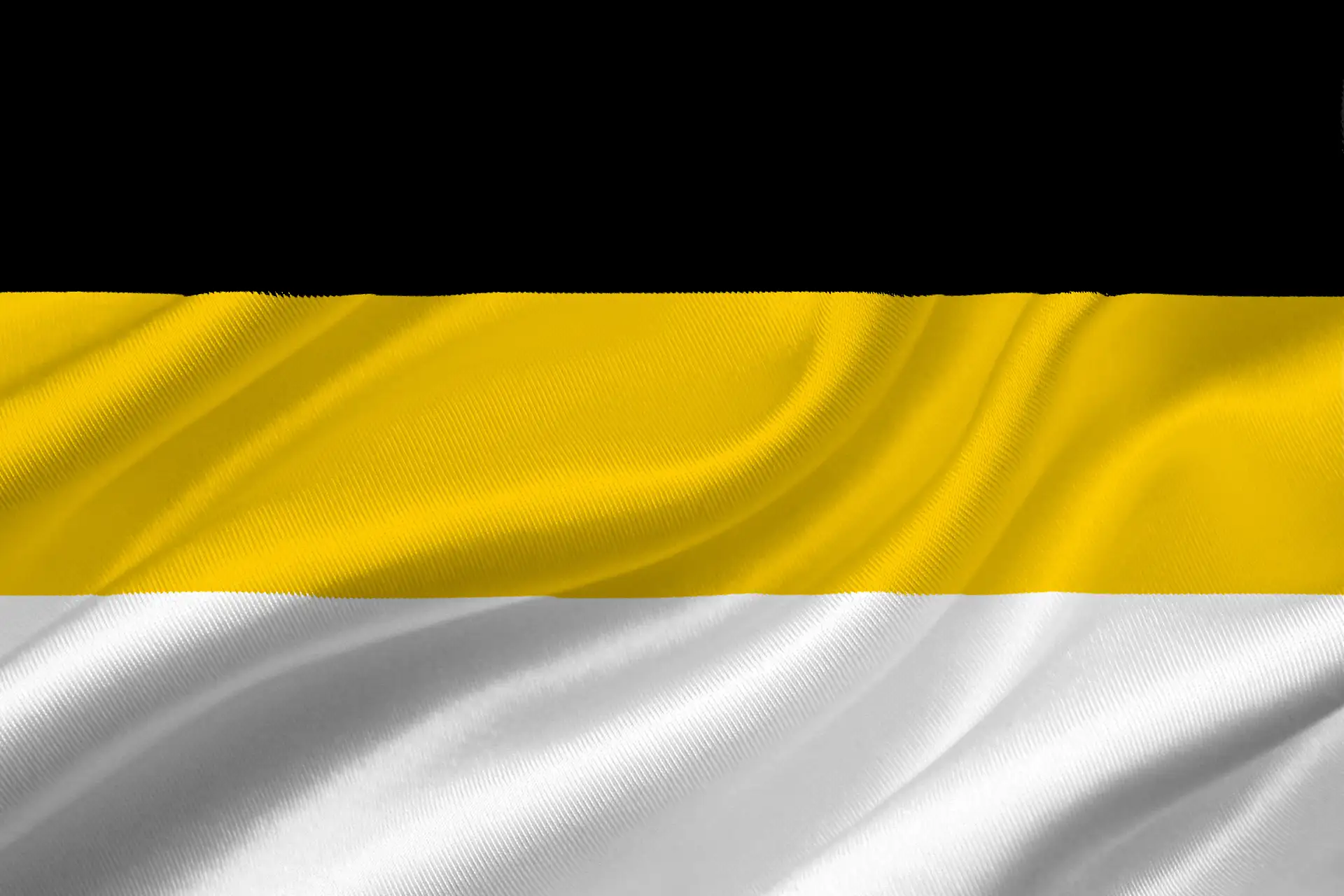
La Bandiera dell’Impero Russo, adottata ufficialmente nel 1858, era composta da tre bande orizzontali nero, giallo e bianco, derivate dallo stemma imperiale.
Rappresentava l’autorità dello Stato e i simboli della Dinastia Romanov durante il periodo zarista.
È oggi un vessillo storico di grande valore culturale e collezionistico.
Ratio: 2:3
FIAV: 22

Vendita Bandiera ANPI
Fascia di prezzo: da €8,00 a €886,00 Vedi
Vendita Bandiera Donbass Brigata Prizrak
Fascia di prezzo: da €8,00 a €886,00 Vedi
Vendita Bandiera Crimea
Fascia di prezzo: da €8,00 a €886,00 Vedi
Vendita Bandiera di Stato Doneck
Fascia di prezzo: da €8,00 a €886,00 VediThe Russian Empire flag has an official ratio of [2:3].
The Russian Imperial Flag represents one of the most powerful and recognizable symbols of European history between the 19th and early 20th centuries. Officially used between 1858 and 1896, it embodied the authority of the state, the continuity of the Romanov dynasty , and the imperial ideology that guided the territorial and political expansion of Tsarist Russia.
Today, the flag of the Russian Empire is sought after by collectors, historical reenactors, cultural institutions, and vexillology enthusiasts. The opportunity to purchase faithful reproductions, produced in Italy and crafted from select materials, allows this historical symbol to be enhanced with high quality standards and attention to detail.
The period between 1858 and 1896 represents a crucial phase for the Russian Empire. In 1858, under the reign of Tsar Alexander II of Russia , a new state flag was officially adopted, replacing the informal use of previous ensigns.
Alexander II is remembered as the “liberating tsar” for the abolition of serfdom in 1861, a landmark reform that profoundly transformed Russian society. In this context of controlled modernization, even the symbols of the state had to reflect order, authority, and imperial continuity.
The flag remained in use during subsequent reigns, until 1896, the year of Nicholas II’s coronation, when the white-blue-red tricolor once again assumed a predominant role as the national symbol. However, the official black-yellow-white state flag remained a strong symbol of identity, linked to the idea of empire and autocracy.
The flag of the Russian Empire adopted in 1858 is composed of three horizontal bands of equal size:
black on top
yellow (or gold) in the center
white at the bottom
These colors were not random, but directly linked to the symbols of the Russian Empire and the imperial coat of arms. The black and gold derived from the imperial double-headed eagle on a gold field, while the white recalled Saint George, a central figure in Russian heraldry.
Black represented imperial power and the stability of the state.
Yellow symbolized the sacredness of power and the connection to Byzantine tradition.
White evoked purity, faith, and divine protection over the Empire.
Properly reproducing this flag means respecting not only the proportions, but also the color tones and the visual impact of the materials. The high-quality reproductions, handcrafted in Italy, guarantee historical consistency and a superior aesthetic, ideal for exhibitions and institutional settings.
During the period of official use of the black-yellow-white imperial flag, three rulers of the Romanov dynasty succeeded one another .
He was the promoter of the adoption of the flag in 1858. His reign was characterized by structural reforms, but also by strong internal tensions that culminated in his assassination in 1881.
A conservative, he strengthened Russian autocracy and national identity. During his reign, the flag of the Russian Empire continued to be used as the official state symbol.
The last emperor of Russia, in 1896 he sanctioned the return of the white-blue-red tricolour as the national flag, while maintaining a strong imperial symbolism until the 1917 revolution.
One of the most interesting curiosities concerns the political and cultural debate over the use of national colors. The black, yellow, and white flag was considered by some to be “too Germanic,” while the Russian tricolor was perceived as closer to the people.
Another little-known aspect is that the imperial flag was often used in official contexts, state ceremonies and government buildings, while the tricolour was more widespread in commercial and civil spheres.
Today, this very distinction makes the flag of the Russian Empire an object of great historical and collector’s interest, especially if faithfully crafted and made with quality materials.
From 1858 to 1896, the Russian Empire was one of the largest states in the world. Its borders stretched from Eastern Europe to the Pacific Ocean, including territories of present-day Poland , Finland, the Baltics, Ukraine, the Caucasus, Central Asia, and Siberia.
This vast territory made the use of a strong and recognizable official state flag even more important , capable of representing imperial authority over diverse peoples, cultures, and religions. The flag was not just a symbol, but an instrument of political legitimacy.
Vendita Bandiera Mosca
Fascia di prezzo: da €8,00 a €886,00 Vedi
Vendita Bandiera Repubblica Popolare Doneck
Fascia di prezzo: da €8,00 a €886,00 Vedi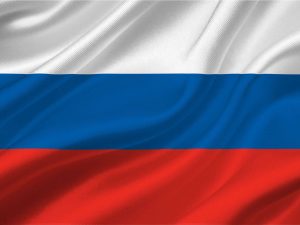
Vendita Bandiera della Russia
Fascia di prezzo: da €4,50 a €886,00 Vedi
Vendita Bandiera Ucraina
Fascia di prezzo: da €8,00 a €886,00 VediNota Bene
Lavoriamo con una infinità di materiali. Se hai bisogno della classica bandiera da usare in interno o sventolare in qualche occasione, l'ideale potrebbe essere il poliestere leggero (80 gr al mq).
Realizziamo anche bandiere importanti da esterno in stamina di poliestere (155 gr al mq), bandiere da interno eleganti in raso (180 gr al mq), bandiere in cotone bifacciali (260 gr al mq).
Compila il form per richiedere un preventivo.
Abbiamo bandiere per ogni occasione e ogni ambiente. Puoi anche consultare la nostra sezione di bandiere economiche in poliestere leggero in pronta consegna e la sezione bandiere per hotel, misura 100x150 cm in poliestere nautico da 115 gr al mq (in pronta consegna).